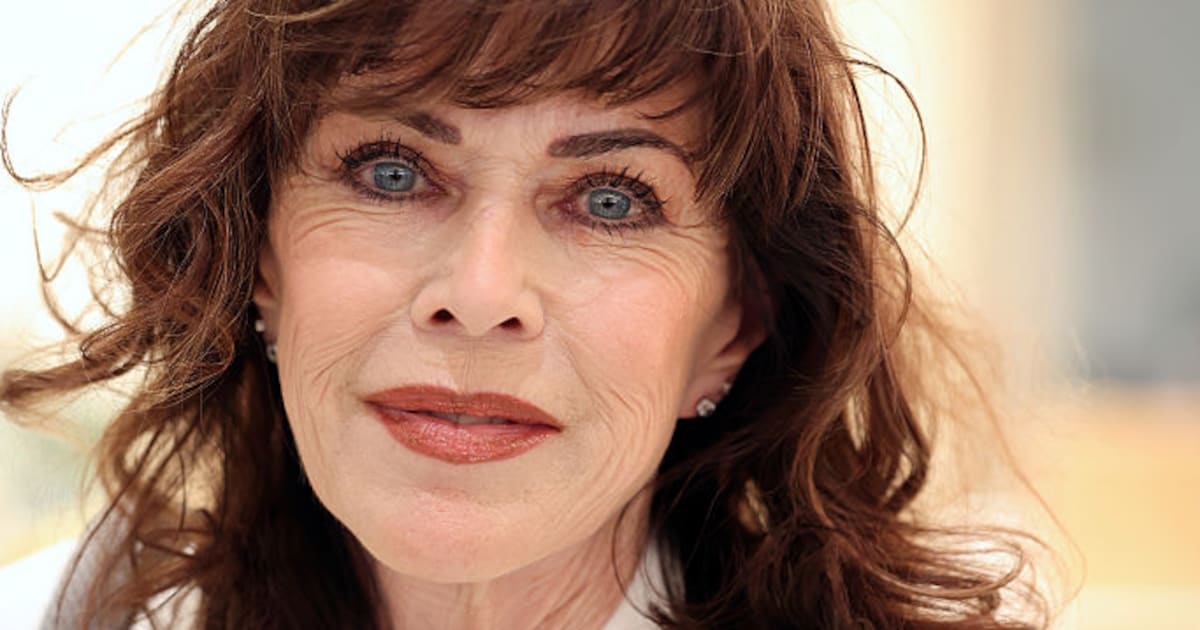
Anja Kruse (69): Why The Stage is Her True Home, Not TV
Anja Kruse, a name synonymous with German television history, particularly for her iconic role in "Die Schwarzwaldklinik" (The Black Forest Clinic), is at 69 years young, as vibrant and outspoken as ever. While millions remember her from their screens, Kruse herself has a profoundly different perspective on where her artistic heart truly resides. For her, the stage isn't merely a preference; it is, as she eloquently puts it, "my home, that's who I am." This sentiment reveals a deeper commitment to the craft of acting, one that often stands in stark contrast to the fleeting trends and perceived superficiality of modern television.
Her journey, spanning decades, offers a compelling narrative of an artist navigating the evolving landscape of entertainment. From accidental TV stardom to a deliberate return to the theatrical roots that nurtured her passion, Anja Kruse's career trajectory illuminates the challenges and triumphs of maintaining artistic integrity in a world obsessed with youth and digital metrics. The question of Anja Kruse Alter (Anja Kruse's age) is not just a chronological fact; it's a lens through which she views the industry's practices and reaffirms her enduring dedication to genuine performance.
From Black Forest Clinic Stardom to the Lure of the Stage
For many, Anja Kruse's image is indelibly linked to the golden age of German television. Her roles in beloved series like "Die Schwarzwaldklinik" and "Das Traumschiff" in the 1980s catapulted her into national fame, making her a household name. These roles brought her widespread recognition and offered a platform for her talent to shine. However, beneath the glamour of prime-time television lay a different truth: Kruse's true calling had always been the theatre.
She openly admits that her foray into television was largely serendipitous. "I actually come from the theatre and never wanted to do television, but it happened by chance," she revealed in an interview. This "accidental" path led her through years of relentless work, moving "breathlessly from one television production to the next." While grateful for the opportunities, she candidly shares that "theatre was missing the whole time." This longing speaks volumes about the distinct nature of live performance and its unique demands and rewards. The immediate connection with an audience, the extended period of character development, and the raw, unedited vulnerability required on stage offered a depth of engagement that television, with its fragmented shooting schedules and distant viewership, couldn't always match. This inherent pull towards the live act explains why, even amidst her TV successes, the stage always represented her true artistic haven.
The Unspoken Truth: Why TV's Allure Fades for Seasoned Artists
Anja Kruse’s critical eye for the contemporary television landscape is sharp and unwavering. At 69, her extensive experience provides a clear vantage point from which to observe the industry's shifts, many of which she views with concern. Her primary critique revolves around what she identifies as a pervasive "youth craze" within many German broadcasters. This trend, she argues, leads to an absurd casting reality where "grandmothers are played by 40-year-olds, who are then made up accordingly." This superficial approach to age representation not only distorts reality but also sidelines genuinely experienced older actresses who could authentically embody such roles.
Even more troubling to Kruse is the rising phenomenon of
influencers taking roles from trained actors. While acknowledging their large follower counts, she dismisses their suitability for dramatic roles, asserting, "They may have many followers, but that has nothing to do with quality in front of the camera." This isn't merely a nostalgic lament; it's a powerful statement about the erosion of craft and professionalism in favour of marketability. True acting, Kruse implies, requires years of training, dedication, and an understanding of character depth, elements often absent in those primarily skilled in social media engagement. This commercialisation of casting dilutes the artistic integrity of productions and denies opportunities to seasoned professionals who have honed their skills over a lifetime. It highlights a fundamental difference in values: for Kruse, quality and authenticity precede popularity, a principle often reversed in the digital age.
Embracing "Anja Kruse Alter": Navigating Ageism in the Spotlight
The concept of "Anja Kruse Alter" (Anja Kruse's age) extends beyond simple demographics; it encapsulates her lived experience and her perspective on the industry's often harsh realities, particularly for women. When discussing aging in the entertainment world, Kruse touches upon a significant disparity that still plagues the industry. She notes with a realistic, albeit disheartened, tone that "The big breakthrough with the end of 50 à la Christoph Waltz, that's not a women's issue, certainly not." This insightful observation highlights a prevalent double standard: while male actors often find new career peaks and complex, leading roles in their later years, their female counterparts frequently face diminishing opportunities and are typecast into more peripheral, often less substantial, characters.
This isn't to say that Kruse yearns for such a "breakthrough" herself. Rather, it's an acknowledgement of an systemic issue within the industry. She expresses contentment with her current path, stating, "I'm just happy to get great roles, completely irrelevant whether they are..." This pragmatic approach underscores her dedication to the quality of the work itself, rather than chasing elusive fame or industry recognition tied to youth. Her focus remains on meaningful roles that challenge her as an artist, regardless of their mainstream prominence.
This perspective offers valuable insight into resilience and self-worth for any professional navigating an ageist industry. It's about finding fulfillment in the work itself, rather than external validation. While the industry might be slow to change its views on
why late career breakthroughs elude actresses, artists like Anja Kruse continue to carve out spaces where their experience and talent are truly valued, often finding that sanctuary on the stage.
The Magic of the Stage: Anja Kruse's Artistic Sanctuary
For Anja Kruse, the theatre offers a unique form of artistic fulfillment that television cannot replicate. Her current engagement, performing in "Undine geht an Land" at the KosmosTheater in Vienna to mark the 40th death anniversary of Ingeborg Bachmann, exemplifies her deep commitment to meaningful roles and profound storytelling. This production, based on a mythic tale, resonates deeply with Kruse, who confesses a lifelong fascination with fairy tales. "I believe I have read all the fairy tales in the world," she shares, adding that they are "not just stories for children; they always contain universal truths, much life wisdom, and messages." Her favourite, "The Little Mermaid," embodies this blend of beauty and tragedy.
It's no surprise then that she identifies strongly with the character of Undine, a mermaid who leaves her aquatic sanctuary to experience life and love as a woman on land. "The statement is that an Undine, a mermaid, leaves her protected habitat and enters into relationships, so to speak, gets legs to be a woman," Kruse explains. "And with togetherness, the difficulties often begin. We have all experienced that in some way." This connection to her roles, exploring universal human experiences through rich narratives, is what truly energises her.
The stage, for Kruse, is a living, breathing entity. Unlike the segmented and often solitary process of filming for television, theatre demands a continuous, sustained performance, fostering an intense bond with both fellow actors and the audience. The immediate feedback, the shared emotional journey in real-time, creates an electric atmosphere that is deeply satisfying for a performer. It's in this raw, unfiltered environment that Anja Kruse feels most authentically herself, where her craft can be fully realised and appreciated without the distractions of youth-obsessed casting or the fleeting nature of digital trends.
A Life Lived Across Borders: Vienna, Paris, Cannes, and the Call of Home
Anja Kruse's personal geography reflects a life rich in experiences, moving between various European cities before finding a "fun home" near Cannes. She spent nearly a decade in Vienna from 1983 to 1992, a period she describes as "an incredibly exciting time," witnessing the city's transformation under then-mayor Helmut Zilk. Post-Vienna, her journey led her to Paris, another cultural hub, before she eventually settled in the south of France. While her current residence near Cannes provides leisure and relaxation, she openly admits that "with culture, there's not much there." Yet, her affection for Vienna remains, hinting at a potential return someday.
However, irrespective of her physical address, the stage remains her unwavering "Heimat" – her true home. This distinction is crucial for understanding Anja Kruse's artistic philosophy. While her physical homes provide comfort and a base for living, her artistic home is where her spirit thrives, where her identity as an actress is fully realised. The stage transcends geographical boundaries, offering a consistent space for expression and connection that her varied physical residences, no matter how beautiful, cannot replace. This sense of belonging, rooted in her craft, anchors her amidst the ever-changing tides of life and career.
Conclusion: The Enduring Power of Craft
Anja Kruse's journey from television icon to stage stalwart is a powerful testament to the enduring value of artistic craft over transient fame. At 69, her incisive critique of television's "youth craze" and the rise of influencers isn't just a veteran's lament; it's a call for authenticity and quality in an industry increasingly swayed by metrics of popularity. For her, the stage isn't merely a preference; it is where her heart beats loudest, where her talent finds its most authentic expression, and where her "Anja Kruse Alter" becomes a badge of wisdom, not a barrier. Her commitment to theatre, her deep connection to storytelling, and her unapologetic dedication to meaningful roles solidify her legacy as an actress who truly understands that the stage is not just a platform, but a sacred home for the soul of an artist.